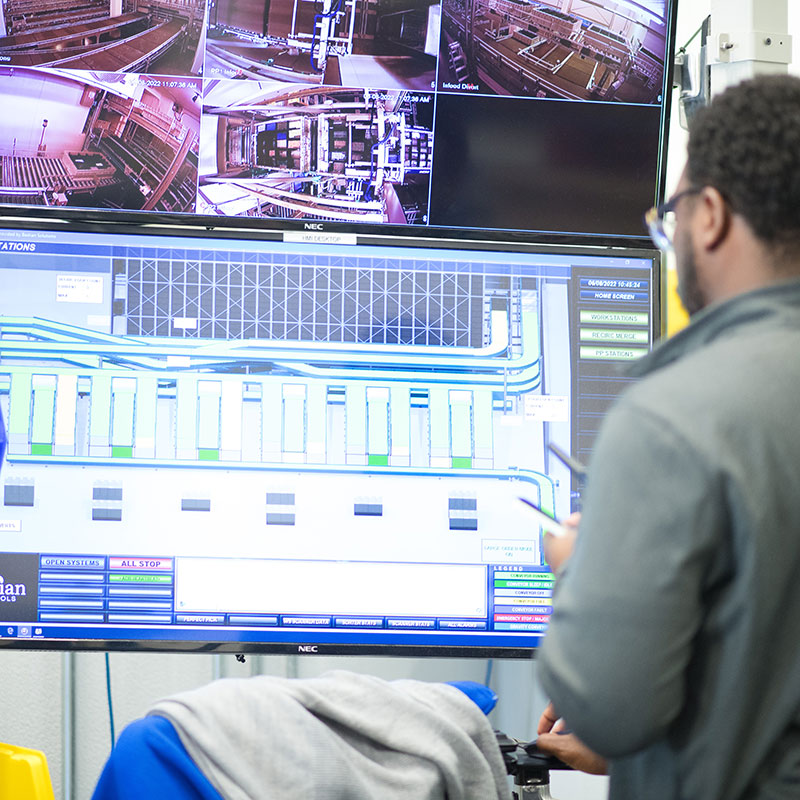
Labor and resource planning has always been a moving target. Even the most well-run warehouse or fulfillment center can struggle to match staffing levels with demand. When the right people aren’t available at the right time, delays stack up, costs rise, and service levels slip.
Operations teams are up against a familiar set of challenges like fluctuating order volumes, high turnover, and inefficient workflows that create bottlenecks. In the 2024 MHI Annual Industry Report, more than half of material handling leaders cite talent shortages—hiring and retaining qualified workers—as one of their biggest challenges, ranking it as very or extremely difficult to manage. Scaling up often means adding temporary workers or increasing overtime, but that’s not a sustainable strategy. How work is structured and allocated has just as much impact on efficiency as the number of workers on the floor.
Material handling automation provides a way to stabilize operations, improve labor efficiency, and optimize resources without relying on constant hiring cycles. But before looking at the solutions, it’s important to understand where the biggest inefficiencies emerge and why workforce planning remains a challenge.